International Women’s Day
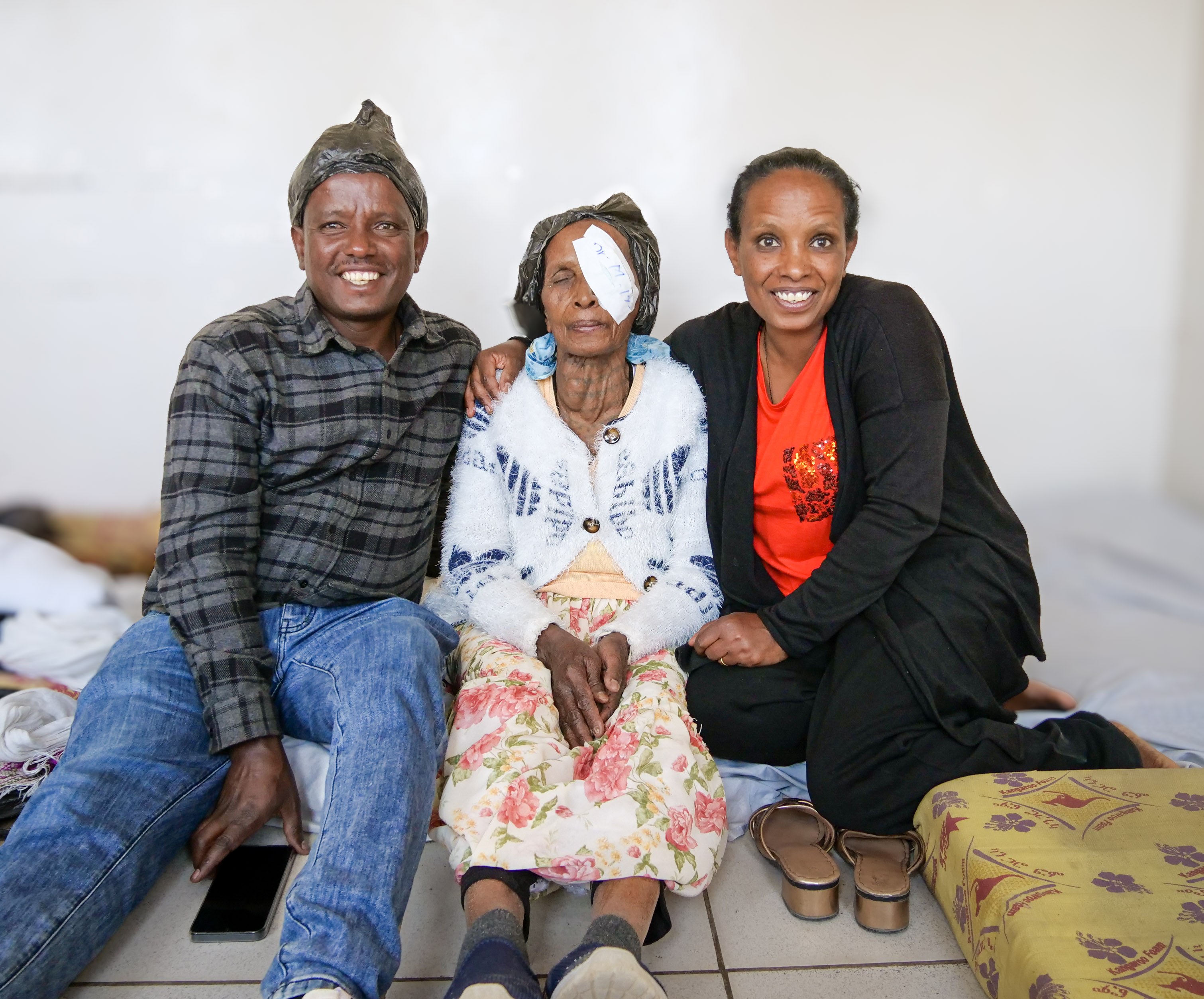
This year’s International Women’s Day theme, "When we give, we gain", feels deeply woven into the fabric of Cure Blindness Project.
<p>Across our global network — from surgeons and nurses to program leaders, partners, donors, and advocates — extraordinary women give their time, talent, expertise, and heart to the mission of curing blindness. And through that giving, something powerful happens: sight is restored, opportunity is unlocked, and entire communities rise.</p><p>At Cure Blindness Project, we see this truth every day. Women ophthalmologists and trainees are gaining skills and confidence through education. Women leaders are strengthening health systems. Women volunteers are fueling sustainable eye care programs that change the trajectory of families for generations. Their giving creates a ripple effect — one surgery, one training, one partnership at a time.</p>
<figure style="max-width: 100%">
<img
title="International Womens Day web" alt="International Womens Day web" class="full" style="width: 1800px"
src="https://d3c4xa94vmylbm.cloudfront.net/images/International-Womens-Day-web.jpg"
srcset="https://d3c4xa94vmylbm.cloudfront.net/images/_1800xAUTO_crop_center-center_80_none/International-Womens-Day-web.jpg 1800w, https://d3c4xa94vmylbm.cloudfront.net/images/_1200x500_crop_center-center_80_none/International-Womens-Day-web.jpg 1200w, https://d3c4xa94vmylbm.cloudfront.net/images/_800x333_crop_center-center_80_none/International-Womens-Day-web.jpg 800w, https://d3c4xa94vmylbm.cloudfront.net/images/_400x167_crop_center-center_80_none/International-Womens-Day-web.jpg 400w"
sizes="100vw"
>
</figure>
<div style="height: 40px; width: 100%; clear: both"></div>
<p>International Women’s Day, first marked in 1911 and now celebrated globally on March 8, is not owned by any one country, organization, or movement. As Gloria Steinem once said, “The story of women's struggle for equality belongs to no single feminist nor to any one organization but to the collective efforts of all who care about human rights.”</p><p>International Women's Day belongs to all of us.</p><p>We invite you to learn more about some of the amazing women associated with Cure Blindness Project who are changing the world, one patient, one day, at a time:</p><p> </p><h3><strong>🌍 K-T Overbey, CEO of Cure Blindness Project </strong></h3><p>CEO K-T Overbey says it's a privilege to see the work of Cure Blindness Project up close and in the field.</p>
<div class="row quote-container">
<div class="column shrink quote-image align-center">
<figure style="max-width: 100%">
<img
title="IMG 1661 2316x3088 2b5b2090 6a8f 4e59 8f8f b4c2090fe3c9" alt="IMG 1661 2316x3088 2b5b2090 6a8f 4e59 8f8f b4c2090fe3c9" class="quoteImage" style="width: 600px"
src="https://d3c4xa94vmylbm.cloudfront.net/images/IMG_1661-2316x3088-2b5b2090-6a8f-4e59-8f8f-b4c2090fe3c9.jpg"
srcset="https://d3c4xa94vmylbm.cloudfront.net/images/_600x600_crop_center-center_80_none/IMG_1661-2316x3088-2b5b2090-6a8f-4e59-8f8f-b4c2090fe3c9.jpg 600w, https://d3c4xa94vmylbm.cloudfront.net/images/_600x600_crop_center-center_80_none/IMG_1661-2316x3088-2b5b2090-6a8f-4e59-8f8f-b4c2090fe3c9.jpg 600w, https://d3c4xa94vmylbm.cloudfront.net/images/_600x600_crop_center-center_80_none/IMG_1661-2316x3088-2b5b2090-6a8f-4e59-8f8f-b4c2090fe3c9.jpg 600w, https://d3c4xa94vmylbm.cloudfront.net/images/_400x400_crop_center-center_80_none/IMG_1661-2316x3088-2b5b2090-6a8f-4e59-8f8f-b4c2090fe3c9.jpg 400w"
sizes="100vw"
>
</figure>
<style>.quoteImage, .quote-image p { max-width: 300px }</style> <p>K-T Overbey with a young girl in Myanmar</p><style>.quoteImage { margin-bottom: 20px }</style> </div>
<div class="column small-12 medium-expand" style="padding-top: 40px">
<blockquote style="color: ">
It’s one of these situations (when bandages are removed after surgery) where you realize that humans are humans, no matter where they happened to be born.
<cite style="color: ">
K-T Overbey,
CEO of Cure Blindness Project </cite>
</blockquote>
</div>
</div>
<style>
.quote-image p { margin-bottom: 50px; font-size: .9rem; margin-left: 15px }
</style>
<div class="text-left">
<a href="https://cureblindness.org/who-we-are/katherine-k-t-overbey" class="button text-right solid" target="_blank" style="margin-bottom: 40px">
Learn more about K-T
</a>
</div>
<div style="height: 40px; width: 100%; clear: both"></div>
<h3><strong>🇪🇹 Dr. Abeba Tesfay</strong></h3><p>Cure Blindness Project’s support has been instrumental for pediatric ophthalmologist Dr. Abeba Tesfay in Quiha, Ethiopia. </p>
<div class="image-wide">
<figure style="max-width: 100%">
<img
title="Residency to impact DSC4423" alt="International Women's Day" class="full" style="width: 2000px"
src="https://d3c4xa94vmylbm.cloudfront.net/images/residency-to-impact-_DSC4423.jpg"
srcset="https://d3c4xa94vmylbm.cloudfront.net/images/_2000x1050_crop_center-center_80_none/residency-to-impact-_DSC4423.jpg 2000w, https://d3c4xa94vmylbm.cloudfront.net/images/_1200x630_crop_center-center_80_none/residency-to-impact-_DSC4423.jpg 1200w, https://d3c4xa94vmylbm.cloudfront.net/images/_800x420_crop_center-center_80_none/residency-to-impact-_DSC4423.jpg 800w, https://d3c4xa94vmylbm.cloudfront.net/images/_400x210_crop_center-center_80_none/residency-to-impact-_DSC4423.jpg 400w"
sizes="100vw"
>
</figure>
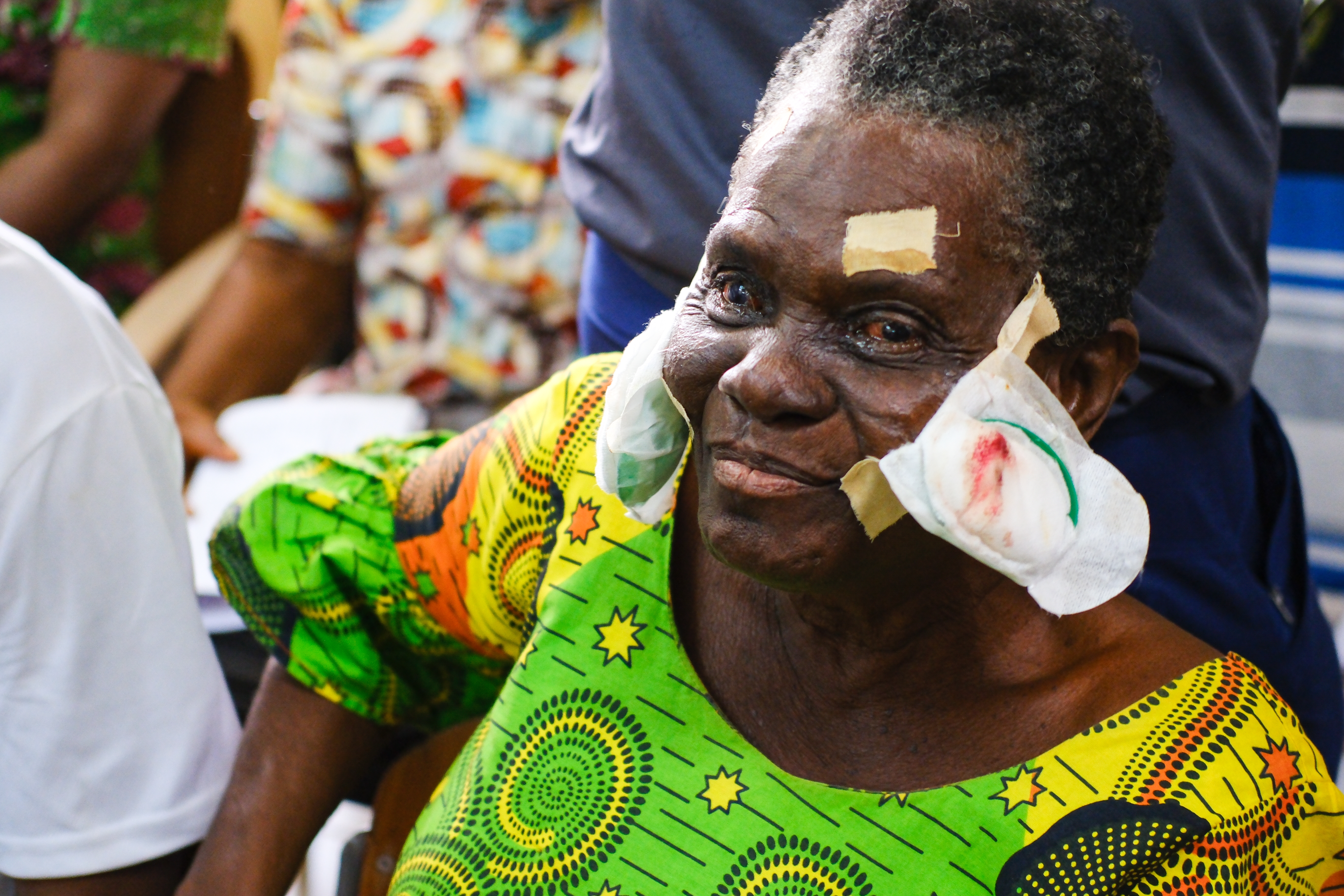
<figcaption>Dr. Abeba Tesfay, one of the ophthalmologists featured for International Women's Day, removes a bandage from a patient following cataract surgery.</figcaption>
</div> <div class="row quote-container">
<div class="column shrink quote-image align-center">
<figure style="max-width: 100%">
<img
title="International Women's Day" alt="International Women's Day" class="quoteImage" style="width: 600px"
src="https://d3c4xa94vmylbm.cloudfront.net/images/residency-to-impact-_DSC4693.jpg"
srcset="https://d3c4xa94vmylbm.cloudfront.net/images/_600x600_crop_center-center_80_none/residency-to-impact-_DSC4693.jpg 600w, https://d3c4xa94vmylbm.cloudfront.net/images/_600x600_crop_center-center_80_none/residency-to-impact-_DSC4693.jpg 600w, https://d3c4xa94vmylbm.cloudfront.net/images/_600x600_crop_center-center_80_none/residency-to-impact-_DSC4693.jpg 600w, https://d3c4xa94vmylbm.cloudfront.net/images/_400x400_crop_center-center_80_none/residency-to-impact-_DSC4693.jpg 400w"
sizes="100vw"
>
</figure>
<style>.quoteImage, .quote-image p { max-width: 300px }</style> </div>
<div class="column small-12 medium-expand" style="padding-top: 40px">
<blockquote style="color: #617F7F">
After finishing my residency in 2021, I returned to serve at my home institution, but soon after, the war broke out. During that difficult time, there were no consumables or even gloves to treat patients—we had to wash and reuse gloves and do our best to provide care with the limited resources available. Following the peace agreement, Cure Blindness Project was among the first to reach out and support our hospital.
<cite style="color: #617F7F">
Dr. Abeba Tesfay,
Ophthalmologist at Quiha Hospital, Ethiopia </cite>
</blockquote>
</div>
</div>
<style>
.quote-image p { margin-bottom: 50px; font-size: .9rem; margin-left: 15px }
</style>
<div class="text-center">
<a href="/news/from-residency-to-impact" class="button text-right outline" target="_blank" style="margin-bottom: 40px">
Learn more about Dr. Abeba
</a>
</div>
<div style="height: 40px; width: 100%; clear: both"></div>
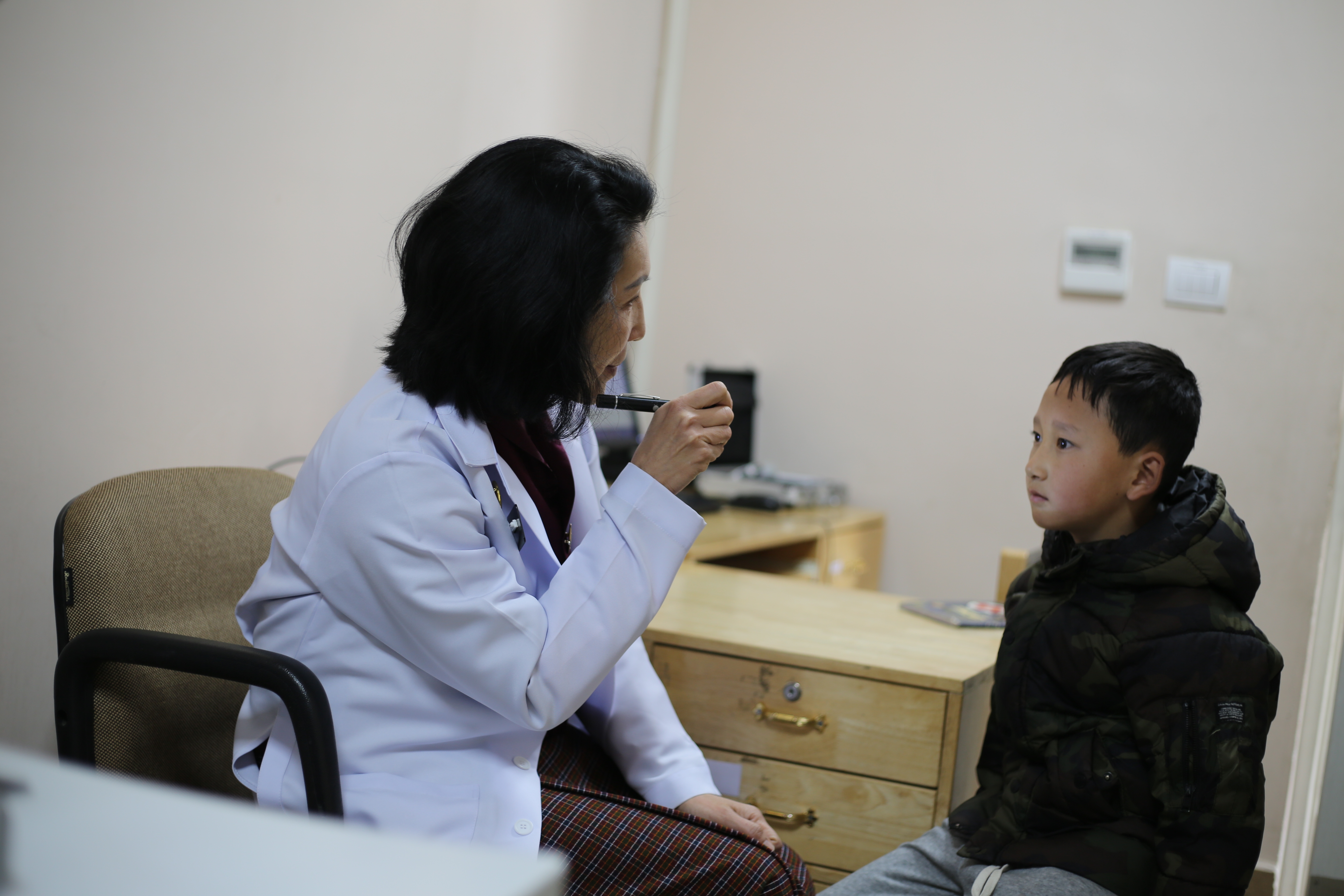
<h3><strong>🇧🇹 Dr. Dechen Wangmo</strong></h3><p>Dr. Dechen Wangmo, Head of the Department of Ophthalmology at the Gyalyum Kesang Choeden Wangchuck National Eye Center in Bhutan, is the country's first pediatric ophthalmologist.</p><p>Through Cure Blindness Project's partnership in Bhutan, including training programs, school screenings, and outreach campaigns, we have helped reduce blindness in Bhutan by over 33%.</p>
<div class="row quote-container">
<div class="column shrink quote-image align-center">
<figure style="max-width: 100%">
<img
title="0 G9 A4958" alt="0 G9 A4958" class="quoteImage" style="width: 600px"
src="https://d3c4xa94vmylbm.cloudfront.net/images/0G9A4958.JPG"
srcset="https://d3c4xa94vmylbm.cloudfront.net/images/_600x600_crop_center-center_80_none/0G9A4958.JPG 600w, https://d3c4xa94vmylbm.cloudfront.net/images/_600x600_crop_center-center_80_none/0G9A4958.JPG 600w, https://d3c4xa94vmylbm.cloudfront.net/images/_600x600_crop_center-center_80_none/0G9A4958.JPG 600w, https://d3c4xa94vmylbm.cloudfront.net/images/_400x400_crop_center-center_80_none/0G9A4958.JPG 400w"
sizes="100vw"
>
</figure>
</div>
<div class="column small-12 medium-expand">
<blockquote style="color: #617F7F">
Strengthening eye care services and expanding access to care is not just about treating eyes—it is about advancing equity, empowering communities, and ensuring every Bhutanese can see a brighter, clearer future. Together, we can eliminate avoidable blindness in Bhutan and uphold the dignity, potential, and promise of every life.
<cite style="color: #617F7F">
Dr. Dechen Wangmo,
Ophthalmologist in Bhutan </cite>
</blockquote>
</div>
</div>
<style>
.quote-image p { margin-bottom: 50px; font-size: .9rem; margin-left: 15px }
</style>
<div class="text-center">
<a href="/work/where-we-work/bhutan" class="button text-right outline" target="_blank" style="margin-bottom: 40px">
Learn more about work in Bhutan
</a>
</div>
<div style="height: 40px; width: 100%; clear: both"></div>
<h3><strong>🇳🇵 Dr. Srijana Adhikari</strong></h3><p>Dr. Srijana Adhikari is one of Cure Blindness Project's most prolific pediatric ophthalmologists and master trainers, serving in Nepal since 2009.</p>
<div class="row quote-container">
<div class="column shrink quote-image align-center">
<figure style="max-width: 100%">
<img
title="Dr SRIJANA" alt="Dr. Srijana Adhikari, clinical advisory board member of Cure Blindness Project" class="quoteImage" style="width: 600px"
src="https://d3c4xa94vmylbm.cloudfront.net/images/Dr-SRIJANA.jpg"
srcset="https://d3c4xa94vmylbm.cloudfront.net/images/_600x600_crop_center-center_80_none/Dr-SRIJANA.jpg 600w, https://d3c4xa94vmylbm.cloudfront.net/images/_600x600_crop_center-center_80_none/Dr-SRIJANA.jpg 600w, https://d3c4xa94vmylbm.cloudfront.net/images/_600x600_crop_center-center_80_none/Dr-SRIJANA.jpg 600w, https://d3c4xa94vmylbm.cloudfront.net/images/_400x400_crop_center-center_80_none/Dr-SRIJANA.jpg 400w"
sizes="100vw"
>
</figure>
<style>.quoteImage, .quote-image p { max-width: 300px }</style> </div>
<div class="column small-12 medium-expand" style="padding-top: 40px">
<blockquote style="color: ">
When I operate on children, and they can see again, it gives me immense pleasure. One day I operated on a child with a cataract; the next day the child could see his younger sister properly for the first time and was hugging and kissing her. I can never forget the smile on that child’s face!
<cite style="color: ">
Dr. Srijana Adhikari,
Pediatric ophthalmologist, Tilganga Institute of Ophthalmology, Nepal </cite>
</blockquote>
</div>
</div>
<style>
.quote-image p { margin-bottom: 50px; font-size: .9rem; margin-left: 15px }
</style>
<div class="text-center">
<a href="/news/dr-srijana-adhikari" class="button text-right outline" target="_blank" style="margin-bottom: 40px">
Learn more about Dr. Srijana
</a>
</div>