Field Notes: Building Surgical Excellence Through Partnership
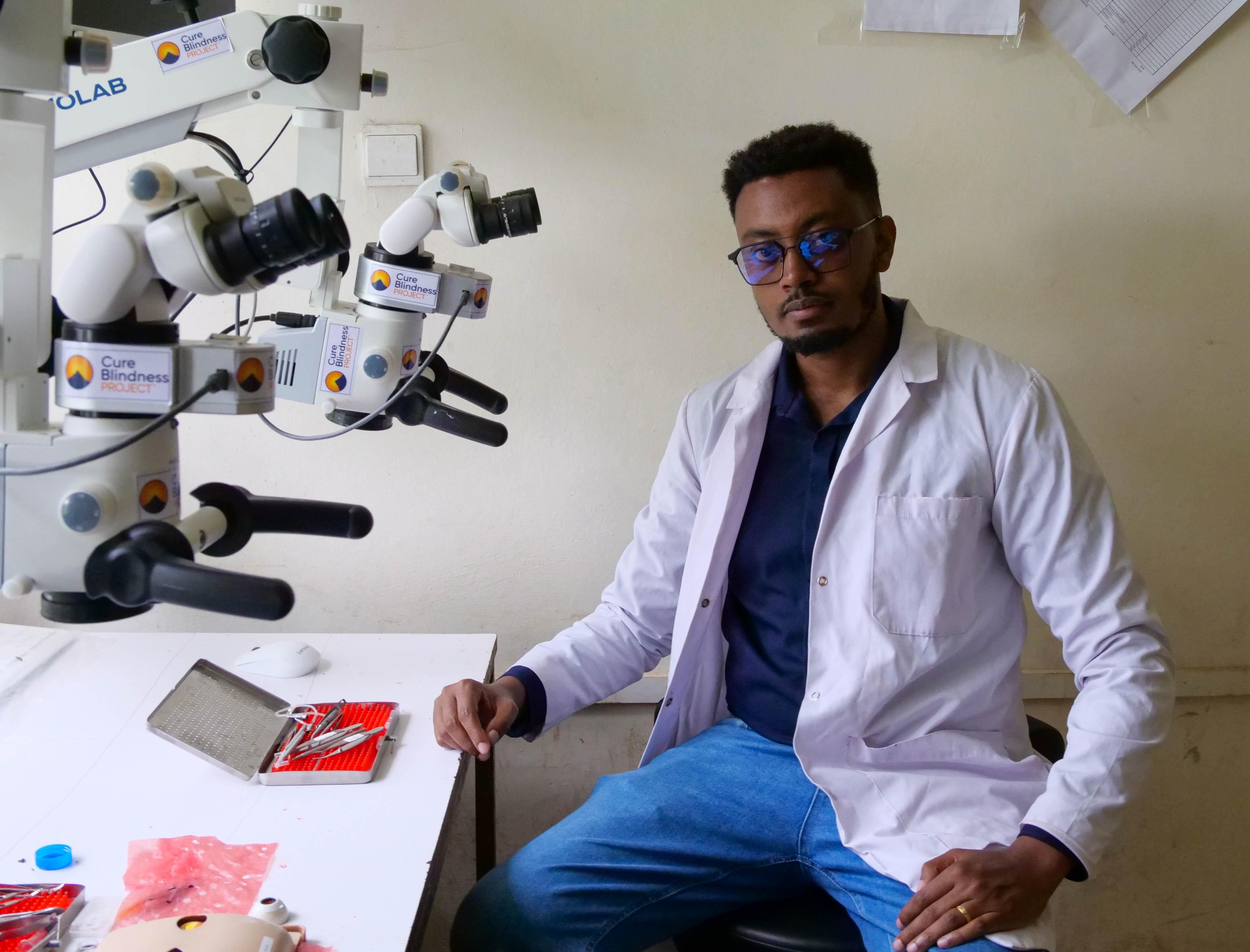
"My name is Dr. Moti Dejene, and I serve as the Wet Lab Coordinator for the Jimma University Ophthalmology Department Residency Program. Surgical training has always been central to our mission; however, it has also been one of our greatest challenges. That reality began to change through our valued partnership with Cure Blindness Project and the generous, ongoing support of Johnson & Johnson.
"Through this partnership, our residency program received critical ophthalmic equipment and simulation tools that have transformed the way we train residents. These contributions included Simuleye eye models for realistic, repeatable surgical practice, as well as iris hooks, capsular tension rings (CTRs), keratomes, crescent blades, and other essential surgical instruments. These items were not simply additions to our wet lab—they filled long-standing and critical gaps in our training capacity.
"Prior to this donation, instruments such as iris hooks and capsular tension rings were entirely unavailable to our program. As a result, residents had no opportunity to practice these techniques, despite their importance in real-world ophthalmic surgery. These tools are essential for managing complex cataract cases, including those involving small pupils or zonular weakness. Without access to the actual instruments and appropriate simulation models, providing adequate hands-on experience was simply not possible.
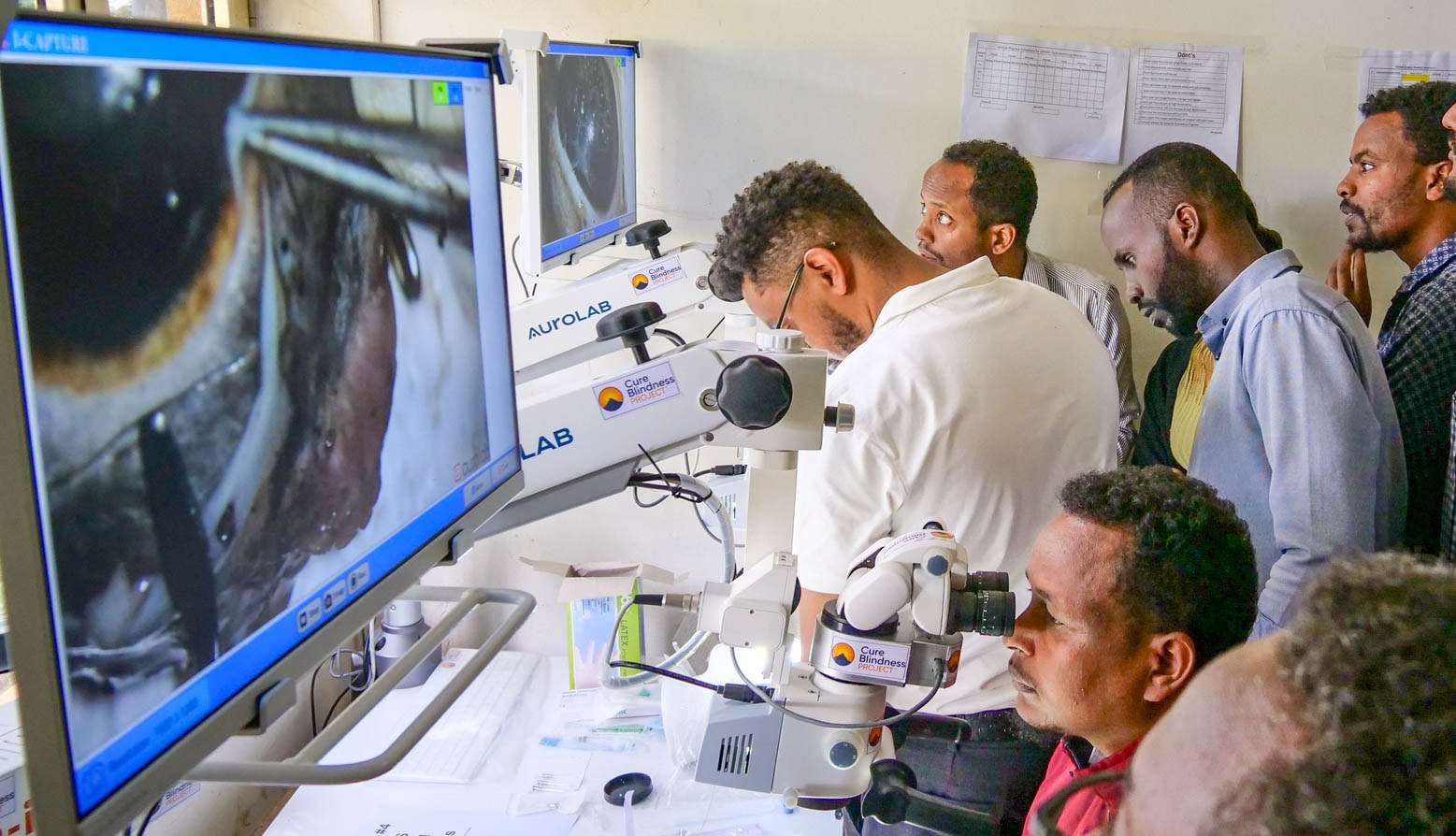
"The introduction of the Simuleye models changed this completely. Residents can now practice safely, repeatedly, and with increasing confidence before entering the operating room. We are now able to structure targeted wet lab sessions focused on iris hook placement, CTR insertion, incision construction using keratomes, and precise tissue handling with crescent blades. This has allowed our program to move decisively from predominantly theoretical instruction to structured, competency-based, hands-on surgical simulation training.

"The impact on resident training has been profound and measurable. One of the most notable improvements has been in continuous curvilinear capsulorhexis (CCC). Residents are now producing capsulotomies that are more consistent, well-centered, and appropriately sized. Confidence in managing complex surgical scenarios has increased significantly, with less hesitation observed in the wet lab and far greater preparedness when transitioning to live surgery. This directly translates into improved patient safety and surgical outcomes.
"On behalf of our residency program, faculty, and—most importantly—our residents, I would like to express our heartfelt gratitude to Johnson & Johnson. Your support extends far beyond the provision of equipment. It represents an investment in education, skill development, and ultimately in the quality of vision care that will be delivered to thousands of patients in the years ahead. Because of your commitment, our young surgeons are better prepared to manage both routine and complicated cataract cases safely and confidently.
"We are deeply grateful for this partnership and for Johnson & Johnson’s continued dedication to strengthening ophthalmic education. Thank you for believing in our program and for investing in the next generation of ophthalmologists."